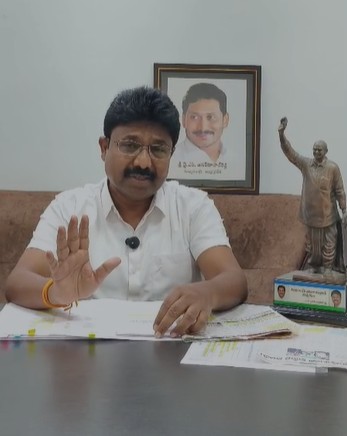
Tadepalli, July 9: Former Minister Adimulapu Suresh declared that the YSRCP would not allow the privatization of the Ramayapatnam Port, stating that the Coalition Government has chosen to auction public assets created during the Y.S. Jagan Mohan Reddy government instead of creating new wealth. He said Chandrababu Naidu came to power promising wealth creation, jobs and a “Golden Andhra Pradesh,” but has spent the past two years privatizing strategic public assets, including medical colleges, educational institutions, ports, fishing harbours and public services. Suresh said the Ramayapatnam Port, spread over 850 acres and built at an investment of nearly Rs. 5,000 crore, was 95% complete under the YSRCP government and equipped with world-class infrastructure, including road and rail connectivity, warehouses and operational facilities. He pointed out that even the Andhra Pradesh Maritime Board’s tender documents value the project at Rs.
4,929.39 crore with an annual cargo handling capacity of 34.04 million tonnes, yet the government is prepared to hand it over for a premium of just Rs. 1,500 crore under a PPP model, with Rs. 750 crore payable upfront and the balance after commercial operations. The concession period extends for 30 years with an option to extend it by another 20 years. Suresh questioned why a nearly completed, revenue-generating public asset should be transferred to private hands after taxpayers had already funded its development.
He said while the government is privatizing completed ports, Minister Nara Lokesh is touring foreign countries claiming Andhra Pradesh offers major maritime opportunities to investors. Suresh said the YSRCP government created assets that would generate long-term public revenue, whereas the present government is distributing them to private interests. He issued a clear warning to prospective bidders that a future YSRCP government would review all such public asset leases, including the Ramayapatnam Port, in the larger public interest.

 *YS Jagan blesses Newlyweds at Kurnool Reception*